
Fed up with big power bills? Why switching to solar power could reduce your bills
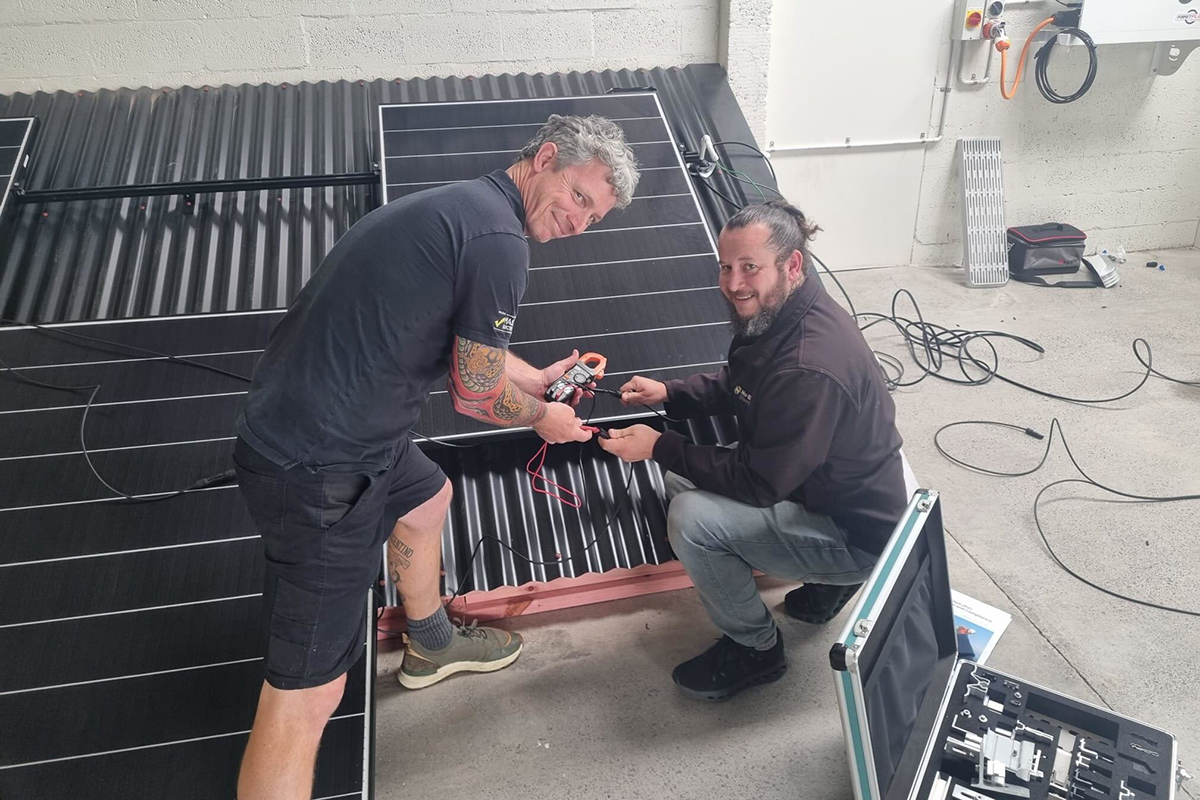
Like many Kiwis, Sam and Jessie assumed solar power was only for off-grid greenies or wealthy homeowners with cash to spare. But as their power bills kept climbing, they started taking a closer look at solar panels for their Auckland home. What they discovered surprised them: solar has become a lot cheaper and more accessible. So, they did their homework, worked out what exactly they’d need to power their Auckland home, and when it was time for installation, they reached out to us.
At No Shock Electrical, we've responded to the surge in households and businesses switching to renewable energy by upskilling our team in solar installation and maintenance. The shift to solar power is accelerating, and we're making sure our expertise keeps pace.
The economics make sense
Beyond the environmental benefits, solar represents a sound financial investment.
A typical household solar system, ranging from $12,000 to $20,000, can pay for itself in as little as five to eight years.
After that payback period, you’re essentially generating free electricity for the remainder of the system’s 25-year life span.
The more electrified your home, the greater your solar savings. Households using electricity for heating, hot water, cooking and especially electric vehicles, see the fastest payback periods. Basically, if you’re charging an EV during daylight hours, you’re maximising your solar investment and dramatically reducing your transport costs at the same time.
The other beauty of solar is that it protects you against future electricity price increases. As power prices continue their upward trajectory, your solar investment only becomes more valuable. With many retailers buying power back at competitive rates, every unit of electricity you export to the grid benefits your household financially.
Financing your solar investment
Making solar affordable is easier than many homeowners realise. Green Loan financing offers a practical pathway to solar ownership, allowing you to spread the cost over time while immediately benefiting from reduced power bills. These loans are specifically designed for energy-efficient home improvements, often featuring competitive interest rates and flexible terms. In many cases, your monthly loan payment can be offset by the savings on your electricity bill, making solar cash-flow positive from day one. It’s worth exploring Green Loan options alongside traditional mortgage financing to find the solution that works best for your situation.
Solar’s moment in the sun
New Zealand’s residential solar uptake has historically lagged behind many other countries, but that’s changing fast. What’s driving this surge? A combination of rising electricity costs, improved technology, and government initiatives is making solar more practical and profitable for homeowners.
Recent regulatory changes are set to supercharge this growth even further. The expansion of permitted voltage ranges means households can now send more power back to the grid, making larger solar systems more economical. For homeowners in Auckland and across New Zealand, this can translate to annual savings exceeding $1,000 on power bills.
Streamlined consent process
One of the biggest changes making solar more attractive is the streamlined consent process. Building consent requirements have been clarified, with rooftop solar panels on existing buildings no longer requiring consent in many cases. For new homes incorporating solar from the design phase, building consents are being fast-tracked to just 10 working days, saving homeowners time and money.
Is solar right for your home?
While solar works brilliantly for most New Zealand homes, it’s first worth considering a few key factors, including:
- North-facing roofs deliver the best results, though north-east and north-west orientations work well too.
- Minimal shading during the day is important for maximising generation.
- Your roof should be in good condition – if major maintenance is needed within the next decade, handle that before installing panels.
The timing of your electricity usage matters too. Solar only generates during daylight, so households using most of their power during the day benefit most. That said, batteries are increasingly viable for storing excess generation to use after dark, and many Kiwis are successfully shifting their energy-intensive activities – like running dishwashers and washing machines – to daylight hours.
The No Shock difference
At No Shock Electrical, we’re responding to the upsurge in interest about solar power for your home or business, and we’ve made sure each of our team is an expert in every aspect of solar installation and ongoing maintenance.
Contact us to discuss how solar can work for you and start your journey toward energy independence.


